Pages

Showing posts with label new orleans. Show all posts

Saturday

Real Milk: A Trip to Mauthe Farms


  "We have never been on a vacation all together at the same time." Jamie Mauthe, of Mauthe Farms, told us in our recent interview.  This quote illustrates one of the many sacrifices small dairy farms must make in order to provide our community with their home grown products.  Set on 40 acres amid the quiet, woodsy town of Progress, MS, Mauthe Farms is one of few dairy farms of its kind left in the Southern area. An abundance of happy cows, who are mainly grass fed, supply the Mauthe family with the essential substance necessary for them to earn their living: milk.
  The Mauthe family has a long history in the milk business that stretches back to the 1930s in New Orleans when raw milk was delivered by truck in the lower 9th ward.  Nowadays, their products appear in markets such as The Crescent City Farmer's Market and Holly Grove.  However, despite their decades of hard work, farmer's markets in the New Orleans area are dying.  And unlike industrialized dairy farms that mass produce milk, family owned farms receive no health insurance or retirement fund.  They are truly on their own when it comes to funding and additional support.
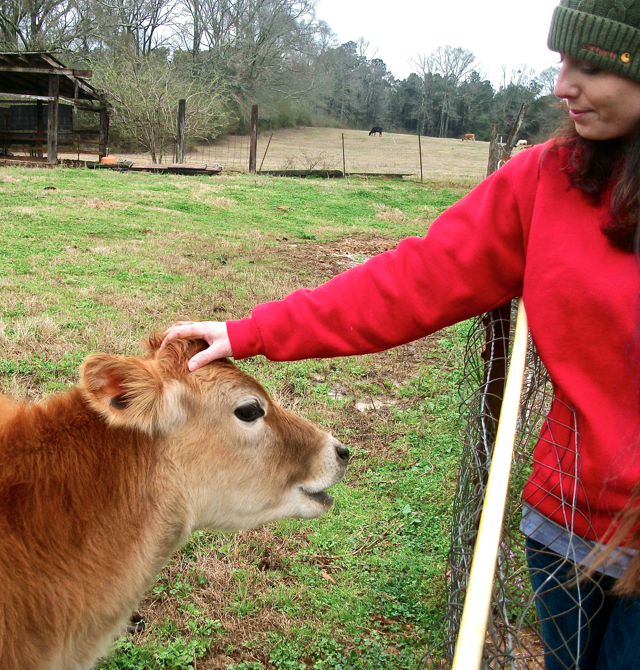
  Our visit to Mauthe Farms was like stepping back in time to when quality food was a necessity in America.  The farm takes care of their cows and breeds them for longevity, with their average cow living to be around 11 years old, contrary to the current industry standard.  Industrialized cows live for a maximum of 4 years and spend their days chained to milking machines. This method of raising cows comes from a perspective based purely on profits and capital gains.  As Sarah said, "It's all about the dollar".  
  Another aspect of the current industry standard for milk involves the ultra pasteurization of milk which removes the enzymes necessary for digestion.  This renders many people lactose-intolerant.  As Mauthe farms uses a low heat pasteurization process, many lactose-intolerant people are able to digest their milk without any problems.  Jamie told us, "a man who had gone 50 years without drinking milk due to his lactose intolerance tried our milk and now buys several half-gallons from us a week".  This just goes to show how loving care, dedication and hard work form the true roots of dairy farming.
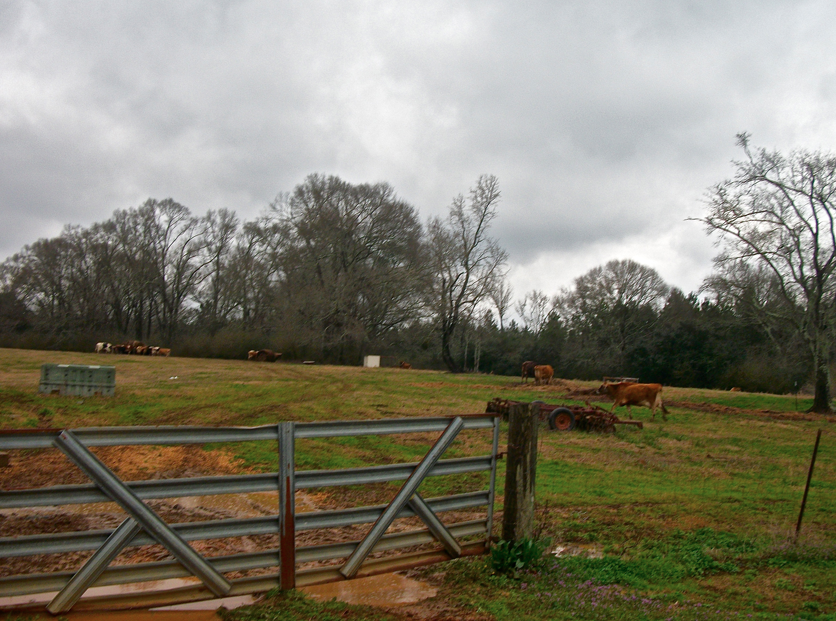
  To the Mauthe family, working on the farm is not a job, it is a way of life.  Our trip to their farm was an eye-opening experience and we believe every consumer should form the same connection to their local farms.  We, as a society, have lost our way when it comes to knowing and appreciating where our food comes from.  To know the Mauthe family and to see their farm is to know what real milk is.
  Consumers have every right to know where their food comes from and how it is produced.  We must take advantage of the information and wisdom that family owned farms provide.  Thank you so much to Mauthe Farms for providing our community with a healthy and safe source for REAL milk.  Don't just take our word for it, take a trip to Mauthe Farms or to one of the local markets and see for yourself.

Thursday

C.A.R.E. Clinic Visits New Orleans: A Volunteer's Perspective

     
  On August 29nd, one of the many mobile C.A.R.E. clinics from the National Association of Free Clinics came to the Ernest Memorial Convention Center in New Orleans. Providing kidney screening, pregnancy tests, health education, and urgent medical care, this event was purely for the benefit of the many uninsured people in New Orleans. Hosted in a large hall in the Memorial Convention Center, its many carefully sectioned medical stations and shiny equipment was an exciting sight. The clinic work force consisted of hundreds of volunteer nurses, doctors, and people simply willing to help out for the benefit of their community. After the volunteers arrived at 9 in the morning and went through orientation, the clinic opened its doors at 11 AM to the public and stayed open well into the night. Soon, the giant hall was filled with people seeking medical care- men, women, children, the elderly. Each volunteer had a job assignment and knew what he or she was supposed to be doing, Unfortunately, as the day wore on it was plain to see that the clinic's system had flaws.

     Poor communication between volunteers performing one task and the other were rampant. If a folder wasn't properly labeled or the time of the patients' arrival wasn't written down, confused and frustrated volunteers would find themselves bringing people to the wrong place and have to double back to get the correct information.Often patients would be lead to a medical station to be treated by a doctor, only to discover that it was already full and be have to be led back to the small cramped waiting area. Some nurses and/or doctors would come back from the restroom or from a break and take a new patient, only to find they had forgotten there was already a patient waiting inside their medical station. Volunteers would be told to collect a certain number of patients from a large main waiting area and then bring them to a specific waiting/treatment area called a pod (in this case, pod A) only to be scolded and/or chastised for not collecting the proper documents. Pod leaders, a sort of manager for each medical area, were stressed and often absent from managing the pod, leaving the largely untrained volunteers to organize hundreds of medical patients themselves. These mistakes, mostly driven by poor management, led to time consuming delays, longer waits for patients, and higher stress levels on volunteers.

      By the end of the shift at 3 PM, many volunteers were relieved to go and have their replacements take over for the night shift.

     Over the course of the day, what appeared to be nearly a thousand patients came and went through the Convention Center doors, some waiting several hours just to be seen by a doctor. Several times, a patient would appear needing to see the cardiologist or optometrist only to find that the doctor hadn't shown up or had taken an unscheduled break. Seeing as this was the C.A.R.E. clinic's third time coming to New Orleans, one would think that they'd have a smooth, well organized plan already in place for the management as well as patients. As one volunteer remarked at the end of the day, "This is New Orleans for you." Even though the day was stressful as well as physically and mentally tiring, many of the volunteers agreed that it was worth it to help the patients get the care they needed.

"It is not how much you do but how much love you put in the doing." Mother Theresa

-Photos to come later-

Friday

Mardi Gras in New Orleans: The Modern Life of Beads

 Colorfully decorated floats, masked riders throwing cups from floats, and hundreds of costumed people standing in the streets- these are just a few aspects used to describe Carnival in New Orleans. Since the 1960s, Carnival (also known as Mardi Gras or, more broadly, “the Mardi Gras season”) has been celebrated in and around New Orleans, with big parades such as Endymion, Orpheus and Bacchus dominating the season. Travelers and party goers from all over come to New Orleans in the spring in order to experience the parades and, of course, catch as many beads as they can carry.

Mardi Gras means Fat Tuesday in French, and has been reportedly celebrated in the Louisiana area since the 1840s or earlier. According to legend, the floats and traditions of Mardi Gras were inspired by the French and medieval European celebrations that were brought overseas by immigrants. The first Carnival throws used in the US included sugared almonds, gold painted walnuts, and coconuts, but in the early years of Carnival they were not limited to more unpleasant things such as dirt, flour and quicklime. In the late 1800s to mid 1900s, one of the most prized and often used Carnival throws were glass beads imported from Czechoslovakia. But due to safety concerns, production costs and other political factors, glass beads slowly died out and were replaced by plastic ones.

The advent of the plastic bead was a sudden, but very popular one. The main exporter of beads to the US quickly changed from Czechoslovakia to southern China, where the plastic could be produced cheaply and efficiently shipped to the United States in time for Carnival. The beads now thrown from floats are made mostly from polystyrene, which when extruded (as Mardi Gras beads are) contain hydro-chlorofluorocarbons. Also known as HCFCs, these are potentially toxic carbons that have been shown in some studies to cause cancer and other life threatening diseases. The workers who make Carnival beads are also subject to handling dangerous HCFCs, and many of them are at risk of disease and respiratory illness from working with polystyrene all day. If it is allowed to degrade and seep into the earth, HCFCs can kill off many plants and infect groundwater. When found in the ocean, polystyrene and HCFCs can poison the fish and the abundance of ecosystems within it.

After Carnival and Mardi Gras day, many beads that were not caught or were broken are left lying in the streets, as well as many plastic bags and other assorted trash items. They are then collected and thrown away. The beads are very harmful in the way that there is almost no safe way to get rid of them; if you incinerate the beads, they excrete toxic chemicals that send pollution into the air. Polystyrene beads are not easily recycled in the United States, though they are in some European countries. As modern landfills do not allow most plastic waste to be degraded and the beads are resistant to photolysis, they can sit in the dumps for hundreds of years, leaching chemicals and harmful dyes. There are a few ways to safely degrade plastic and polystyrene, such as properly heated incineration techniques, but they are rarely used in the United States.

Should Carnival parades consider going back to throwing primarily glass beads instead of plastic ones? The answer could be both yes and no. Yes, because of the negative environmental impacts of plastic beads in landfills and waste sites, not to mention the wasted labor of factory workers to produce strings of beads that are bought, thrown, and then dumped. Another answer could be no, because glass beads are much more expensive than plastic ones so they would be thrown less often than is usually expected in parades, causing public indignation and perhaps be less of an “economic boost” for the South and for China. A combination of both glass and plastic beads, perhaps, and some new producing/recycling techniques could be the key. Whatever is decided for the future of Mardi Gras and Carnival in New Orleans, no one can disagree that it is a unique traditional celebration and there is nothing quite like it anywhere else.